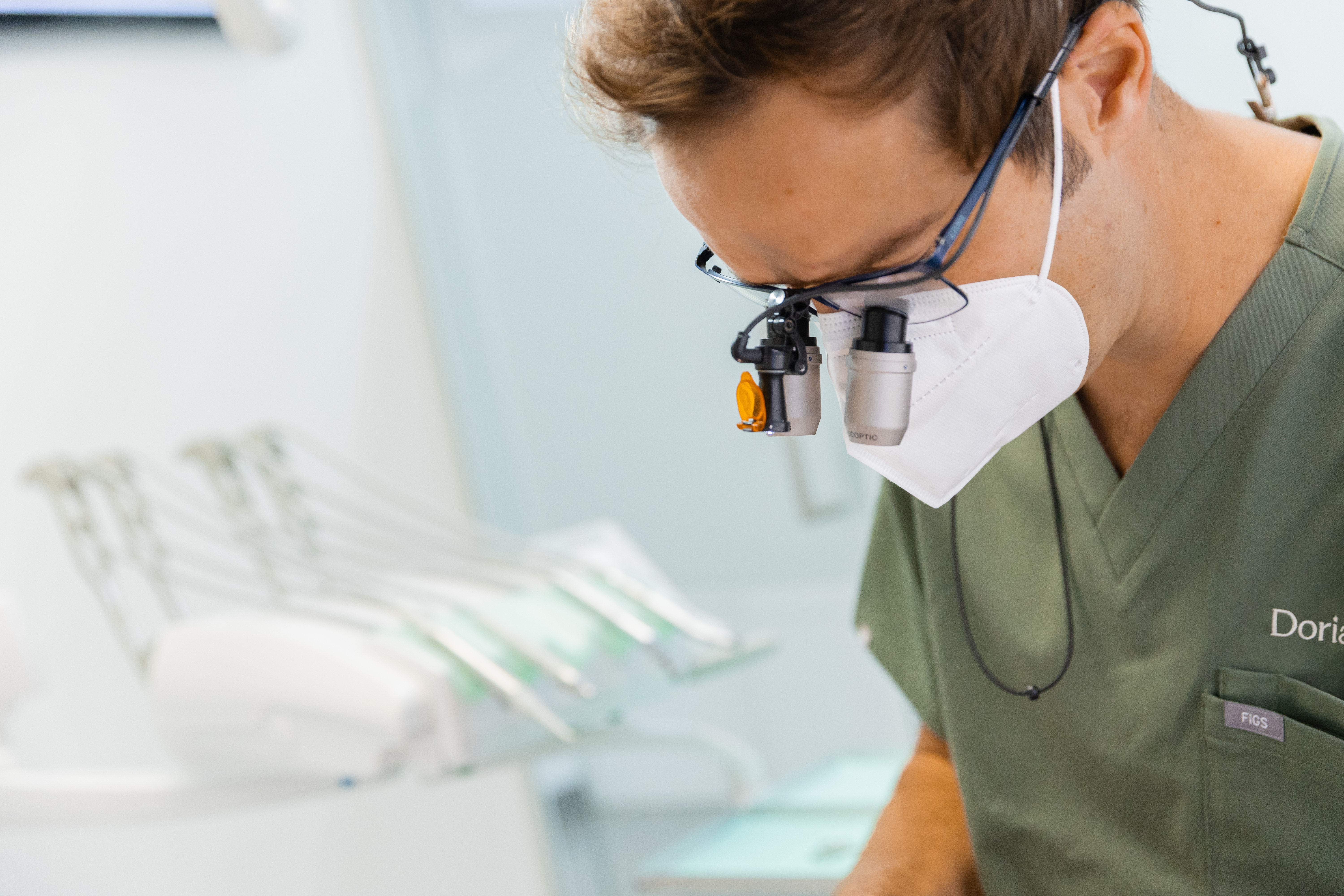
What it is
Professional dental hygiene removes bacterial plaque and tartar built up in areas daily brushing doesn’t reach, especially between teeth and beneath the gumline, within general dentistry.
Why it matters
It’s the most effective preventive treatment against decay and gum disease. Catching gum inflammation early, at the gingivitis stage, stops it progressing to periodontitis, which is far harder to reverse.
What the process of Professional Dental Hygiene looks like
- Assessment We assess the condition of the gums and teeth before starting the cleaning.
- Removing plaque and tartar Using ultrasonic and hand instruments, we remove the deposits built up on the tooth surface and beneath the gumline.
- Polishing and hygiene advice We polish the tooth surface and go over brushing and flossing technique with you to help maintain the result.
Frequently asked questions about Professional Dental Hygiene
Does teeth cleaning wear down the enamel?
No. Ultrasonic instruments remove tartar without damaging healthy enamel; the smoother feeling is because built-up plaque and tartar are removed, not enamel.
Why does the gum sometimes bleed a little during cleaning?
It usually indicates there was previous inflammation from plaque build-up. The bleeding stops once the gum recovers with proper daily hygiene.
How often should I get a cleaning?
For most patients, once or twice a year. If you have a history of periodontitis, we may recommend a higher frequency as part of your periodontal maintenance.
Treatments related to Professional Dental Hygiene
TMJ and Bruxism Treatment
Diagnosis and treatment of jaw pain, joint clicking and night-time bruxism, with custom night guards to protect your teeth and ease muscle tension.
View treatment →Oral Cancer Screening
Visual and physical examination of the lips, tongue, gums and oral mucosa to catch suspicious lesions early, included in every routine dental check-up.
View treatment →





) (1).jpg)
.jpg)

.jpg)
.jpg)
.jpg)
.jpg)